Showing posts with label travel. Show all posts

27 Sept 2020

Tickle's Flown Away to the Rainbow Bridge...

It happened almost three months ago, within the first hour of the last day of June, and I still feel numb with pain. It happened quickly, six weeks after your being diagnosed with a nasty lung condition with a big long name (idiopathic pulmonary fibrosis). So quickly, it is still hard to take in.

R.I.P. Tick-Tick, We'll meet again, at the Rainbow Bridge!

I have since been assured that you are watching over me from where you are now and that, in your world, beauty is magnified and life is one big ball... of energy, high and bright.

We met on the August Bank Holiday week-end of 2006 at Manchester Dogs Home (U.K.) and it was love at first sight. I saved you and you saved me, you my best friend, my soulmate, close family and my now guardian angel.

Tickle: "Why are you crying, mum? I'm not going anywhere!"

You were one little hyperactive bundle of Jack Russell Terrier dynamite, running around, loving to play fetch and barking away to your heart's content, never tired, never fed up, always up for action! You weren't for the faint-hearted or the sedentary; you were just right for me, we fitted in each other's active lifestyles!

We navigated the highs and lows of life, together, always together. My life revolved around you. We were one unit, inseparable, out and about, trekking up the mountain, driving around the island, exploring places, visiting people, making friends, running errands, taking photos, daydreaming, sat on the beach, baking, gardening, saving things, fixing things, trying to fix the world one random act of kindness at a time... Oh, and you could be so funny at times, such an entertainer! And you turned heads anywhere we went, because quite frankly you were one good-looking tricolour Jack!

Your little bed, toys and cushions have remained at the same spot, less than one foot away from my desk. Your leashes, harness and collar are still hanging from the hook by the front door. In the kitchen, your cushion (that you loved plumping up so much!) has been taken over by three kittens called Coco, Reuben and Rohmus, all cuddled up together. You already knew Coco (11 months old now) and we helped her stray mummy cat Midnight raise her. As for 4-month-old Reuben and Rohmus, you must have brought them to me within a couple of days of your departure as I found them outside our front door with their four siblings and an overwhelmed Midnight who had delivered the new litter... Tick-Tick, you softened the blow with a flurry of kitties, showing me that life goes on, life must go on, for those kittens at least to live it.

So life goes on as it must, with joy and heartbreak all at once. With you, my Tickle, on my mind and in my heart forever always. I miss you greatly.

Run Free, Fly High, Together Always! I love you.

16 Apr 2018

Flannel, Foxglove and One Fancy Fox

You know how it goes: you start off reading something online and end up caught in an interweb that steals hours from your life, hours which you will never get back. Sometimes though, you can turn this to your advantage, especially if you are an artist in search of inspiration - or more prosaically - if you have a blog to feed.

I started off this Brett Ryder journey by logging into my inbox, looking at a newsletter from the Balance Festival, and from there randomly clicked on one of their sponsors - Arctic Power Berries - that took me right to one of their own sponsors - Fenwick - and there this illustration from The Summer Season campaign caught my eye. A blog article was born.

The Summer Season campaign by Brett Ryder for Fenwick

The artwork looks a little frivolous, thank goodness, for frivolity is what is needed right now after the last few months my family and I have been through. So a little sunshine and a smattering of quirky characters and floral embellishments will do us fine. Besides, an ode to Summer will always get our votes, especially after a rather long Winter packed with bitterly cold days and nights spent in a Medieval house with no central heating and a leaking roof terrace!

More surrealism with a softer side is to be had when you browse Brett Ryder's agency portfolio. Here are a few notable pieces:

 'Can you build softer skills?' article for Construction Manager magazine, artwork by Brett Ryder
'I couldn't get anywhere' article for Brummell magazine, ibid.
Health Affairs, MERS in the Middle East, ibid.
Action for Happiness for The Telegraph, ibid.
'Rites: A Childhood in Guatemala', by Victor Perera for Beat #6, published by Heart, ibid.
Nongfu Spring mineral water bottle label - 'Summer', artwork by Brett Ryder

Wahey, if that bottled water taste as magical as its label, we are in for a treat!

Make sure to check out Brett's website portfolio.

11 Apr 2018

Say it with Flowers

When words fail to express how much I miss you, and fail to lend me the strength to hold my own onto that ship...

While your being gone has cast our lives into disarray like a tempest unforeseen, bashing us castaways against the harshness of our depleted surroundings, wreak havoc our lives, split open our hearts...

Despite your not being afar for I can feel you around, softly brushing past, hesitant tip-toe, lingering into regretful embrace, gliding up and down the Stairway to Heaven in nocturnal errance...

If only you whisked me along.


Bloomers Flowers & Decor

How I care to imagine living a day without you and still carry it through, whether my life will be whole again despite the hole that you left...

How what mattered yesterday has come to pass and lies at our feet in its irrelevant, insignificant splendour...

And whether I seek to explain to the rest of you here - or not,

I shall never cease to love you.

When words lack a word and words fail your hurt, elude or go astray, laced into the atemporality of the present hurt...

You have to forget the words and forgive them too.

And let flowers do the talking for you.

© Nathalie Hachet Kuntz, 11-Apr-2018

23 Dec 2017

Aynhoe Park's Cabinet of Curiosities

Oh, don't I love it when a blog visit sends me onto an unexpected journey with twists at every turn! Curiosity takes you places you hadn't heard or thought about!

Hui's wedding dress by Phillipa Lepley; wedding venue: Aynhoe Park.

It started off with The Londoner Rosie Thomas's customised wedding dress post, followed by her wedding designer Phillipa Lepley's portfolio, and then onto her client Hui's wedding venue: Aynhoe Park, Oxfordshire, England. But what could have easily been mistaken as yet another palladian country house, revealed a full-scale treasure trove of eclectic antique pieces, eccentric objets d'art and modern pieces that have blent together well into a potent cocktail and lent the place a distinct mood halfway between antiques shop, Natural History Museum and a well-travelled, well-heeled collector's cabinet of curiosities! And when I come across those, time crashes to a standstill. Exploration is a must!

The Aynhoe Unicorn: bold, brash and larger than life!
The Aynhoe Unicorn (detail), painting by Rico White, via A Modern Grand Tour

If history, the statuary, and unique quirky heirloom pieces are your thing, then you have it in spades here, and the little kid in you will awaken to those treasures. I must say that I am no fan of taxidermy and animal trophies in all their forms but if I summon the little kid in me convincingly enough, I might be able to work miracles, Night at the Museum style...

Look up, look down, the folly is all around! Photography by Barker Evans.

This is certainly a magical place that has the power to turn into a magical land of its own accord, depending upon how wild your imagination is and/ or with Santa's little tipple helpers! You are nudged on your journey: Aynhoe Park is interlaced with elements of fantasy (unicorns of all creatures!) and Narnia-esque elements raring to come to life and play!

White Witch Awakening, by Miss Aniela, surreal fashion series photoshoot (2014), via ibid.

Thus all that is needed is to believe and to let your imagination loose and soon enough the creatures will come to life and whisk you away into their dreamlike world! Step into the wardrobe, enjoy the party, Christmas is only a twinkle away!

Pair of Brass Waterlilies, via A Modern Grand Tour
The Ostrich Feather Lamp in 'Ivy', via  ibid.
Wooden Cobra Carved Sculpture, via ibid.
1970s Shell Table by Antony Redmile, via ibid.

* Last updated: 06-Jan-2018

Source: Have cash? Purchase a piece of the action and take the magic home. Or just leave it where it belongs, at Aynhoe, providing an enchantment piece to guests and visitors. Yet if you are serious about parting with a little cash and take home an investment piece that is both unique and eccentric, Aynhoe is destination shopping delight!

Aynhoe Park hosts hospitality events and weddings, which is another way of getting up close and personal with its magical wonderland!

25 Nov 2017

The Art Déco Redesign of Saint-Quentin

It is high time Mirabelle paid its dues to a northern French Art Déco town which holds a special place in my heart: my hometown of Saint-Quentin! A born-and-bred saint-quentinoise, I spent my formative years there. I moved away for college before returning briefly home (for three years), and then onto the next leg of my personal journey, the UK.

Most of my family still lives in Saint-Quentin. My parents relocated to Corsica ten years ago and I followed suit from the UK approx. three years later. When my dad left Saint-Quentin, he left his heart behind - and probably even his soul. I left bits of myself behind and fragments of my heart too. Whether we acknowledge it or not, we all leave bits of ourselves behind whenever we up sticks.

Nouvelles Galeries, rue Saint-Jacques
ibid.
ibid.

We are ambivalent as to whether we should have moved away, whether we should have moved on with our lives. For my dad, this has proved virtually impossible after he was forced to sell our much-loved family home, a one-of-a-kind (unique) property whose elaborate construction and overall design he had been personally invested in every step of the way over the course of almost 35 years. A painstaking labour of love carved out of the best materials, using the best skillsets, that makes the house he lives in now a mockery (his words) if only in terms of architectural merit.

Mosaic ribbon (detail), rue de la Sous-Préfecture; another element of the façade is shown on pict. (13)

The irony of it all is that through our time in Saint-Quentin, none of us hardly took any photos of the town itself, none of us photographically recorded its beautiful, history-laden architectural heritage which was the background to our every day. A faux-pas which I reiterated in Manchester! So once again, I find myself reliant upon other people's photography in order to relate a part of my personal, intimate history.

Trade 'Commerce' medallion on a façade, rue de la Sellerie, carved out by French sculptor Raoul Josset

The moral of the story: do not take for granted the locale you live in. Pay attention to it, observe it, acknowledge it and immortalise it with your camera (or your paints and brushes or pencils).

Because this article just so happens to be a tale of ironies, the other irony is that while living in Saint-Quentin, we didn't pay much attention to its Art Déco architecture. We took note of the older (albeit rare) buildings that survived WWI ravages (and to a much lesser extent WWII ravages), namely the Basilique Saint-André (Basilica), Hôtel de Ville (Town Hall), Palais de Fervaques (tribunal) and theatre, all of which were extensively renovated post-war. Scattered vestiges here and there also survived the war. In actual fact, roughly 70% of Saint-Quentin was destroyed by the Great War.

Criée Municipale frontage, place Gaspard de Coligny

Now prepare for some home truths in this tribute:

Art Déco architecture was such an element of our daily lives - we bathed in it - that we found it too mundane and ordinary, to be worthy of any value. We didn't notice its merit, nor did we recognise it formally as a component of the internationally-celebrated design movement. We appreciated it only for what it was: an architectural style that characterised our town (and other northern towns and villages) and made it functional, rather than functional, innovative and eye-pleasing. We did not sing its praise. Rather, it just happened to be there, a mere landscape to our lives.

Brochure, via Calaméo

In retrospect, I wish I had paid attention. I hear you suggest that I could return to Saint-Quentin to soak it all in and capture it but nostalgia, and generally the memory of loved ones gone, times gone and a way of life gone, have ways to make you sea-sick. And this is the pain I have interiorised. Maybe after all, we shouldn't have gone in the first place. Just stayed put. But is this what life is about? Stay put? Deprive yourself of brand new adventures?

Buffet de la Gare, train station restaurant mosaic (detail)
Forged iron and bevelled glass door (detail), rue Voltaire

Now let us be clear. To label Saint-Quentin as strictly an Art Déco town (as modern-day historians tend to do) is a fallacy. It deprives it of its rich, long and checkered history: founded by the Romans, sacked and looted by the Francs (in 406), then by Atilla the Hun (in 450), and later by the Barbarians (in 531). Not to mention other charming visitors like the Spanish conquistadores and the Prussians. Saint-Quentin's strategic location as a gateway to northern and Eastern Europe, made it a geopolitical hotspot and a battlefield, as well as an intersection point between paganism and christiandom.

The Casino cinema, built 1929, a flamboyant landmark

The prevailing Art Déco style across our northern town reflects the fact that 3/4 of its pre-WWI buildings had been blitzed out by war. Thus no expenses were spared when reconstruction came about. This coincided with the flourishing movement of the time, Art Déco, using a variety of materials (brick, stone, slate, marble, granite, mosaics, stained glass, enamel, concrete, plaster, forged iron, stainless steel, bronze, brass, copper, lead, wood) and a palette of techniques that heralded the new and the bold while grounding it into a solid classical approach in terms of proportions, perspective, materials and general elegance. The constructions were made to last the distance in terms of both appeal and quality, not be demolished on a whim within a couple of generations.

Local architectural firms, as well as those from Paris, Lille or nearby, all delighted in the prospect of showcasing their know-how, and added quirky touches as they came up with residential, commercial, institutional and industrial premises, not to mention train stations, churches and war memorials, that lived up to their name, reputation and promises.

Art Déco translated the wave of post-war optimism into a movement. No solemnity to it, only a hymn to joy and oppulence meant to affect everyone positively, if only by way of a little architectural beautification, whatever came to play to perk up a nation raw from the horrors of the Great War.

Over several years, in certain cases to the dawn of WWII (or beyond for churches), the reconstruction of France and other war-torn nations was akin to a beehive of ingeniosity writing the book of 20th century design and paving the way for the mid-century modern of later years. Artisans and craftsmen were an integral part of the workforce, hence process. My great grandad, Joseph, a marine carpenter by trade, travelled all the way from Brittany to Saint-Quentin with his family in order to provide his sought-after skills to the building trade.

The Conservatoire Municipal (Music Academy) lobby area

After all, mass-consumerism hadn't quite cut its teeth into society just yet. France was still being built up out of wares that had been made in France! There was this fierce, strong sense of belonging and the Nation State. Personalisation, customisation and innovation played an important part in Art Déco craftsmanship. The result was an architectural equivalent of fashion haute couture or a quality off-the-peg piece, rather than ready-made, pre-assembled ensembles churned out on an industrial scale. Ironwork was hot off the local forge, not off Home Depot.

Decorative terracotta grapevine relief band, residential property, Champs-Elysées area?

All these elements fuse together into lessons in contemporary design and late neo-classicism that many a modern-day architect worth their salt should embrace rather than run from or deride. I cannot bear to think what our towns and cities would look like if they were being rebuilt today, under this post-industrial, post-craftsmanship styleless, paradigm of using cheap and cheerful one-size-fits-all Far-East imports that line up the shelves of DIY chain stores. I can all too painfully notice its ravages at a local level (in Corsica), the breeze block-plasterboard-PVC residential combos with their utterly charmless personality-devoid utilitarian Soviet finished look. Life is meant to be celebrated, not mourned, which is why Art Déco should make us thankful. Rejoice, people, rejoice!

Glass and metal front door, rue de la Sous-Préfecture; another element of the façade is shown on pict. (4)

Sources: Art Déco knows no blandness. Art Déco as a movement created bold, awe-inspiring, sculptural - even flamboyant - statements. Think the Chrysler Building! Made up of bold, aerodynamic, streamlined curves, abstract patterns and geometric florals and feathers, it is meant to be embraced from a distance and appreciated up close. A celebrated duo of form and function that epitomises good design and relishes both its clean lines and intricate vignettes and frescoes. Born just after WWI, the artistic and architectural movement swept across the world and span across the Roaring Twenties and Depression Era.

Front door (detail) of the Grande Poste (central post office)

(1-3) Construction of the Nouvelles Galeries retail store started in 1922, and the store opened to the public five years later. Despite the building having been disused for the last 50 years, it has nonetheless managed to keep visitors spellbound to this day. While awaiting an hypothetical renaissance, the site has found its vocation as an exhibition hall for... Art Déco exhibitions! (1) Photography by Julien Sarrazin, via On Teste Pour Vous en Picardie. (2) La folle expo d l'Art  Déco, photography via Art Déco de France. (3) Photography via the city of Saint-Quentin's official website. (4-5) L'Art Déco à Saint-Quentin, photography by Jean Triboulloy and Michèle Wojciechowski. (4) Mosaic ribbon (detail) fringing the façade of a much-photographed Art Déco maison bourgeoise residential property, located next to the sous-préfecture. See its panelled glass and ironwork door pict. (13). (5) 'Commerce' medallion on a façade, rue de la Sellerie, carved out by French sculptor Raoul Josset. Interestingly the prolific sculptor moved to the USA in order to pursue his craft under the Art Déco influence; he created larger-than-life statues in his adopted state of Texas. (6) Criée Municipale, unattributed photography via Nicole Boxberger. It features a concrete curved one-storey building that used to host the municipal fish market. I remember it operating until at least 20 years ago. Under the town hall's Art Déco preservation and renovation programme which provides incentives and professional advice to eligible property owners from both the public and private sectors, the Criée was renovated. Its lettering, which used to be a tomato red on cream, has now been given a flattering blue floral treatment that lends panache and a little relief to the signage. The neat Art Déco typeface is pure typographical delight! (7) Art Déco has taken centerstage in Saint-Quentin only recently, over the last 25 years. Prior to that, the movement might have been perceived as being still too recent in order to deserve acknowledgement and critical acclaim from local historians, the local authorities and the local population alike. The brochure 'Raconte-moi l'Art Déco à Saint-Quentin' was published by the Local Authority (Agglomération du Saint-Quentinois), and is available to read via Calaméo. (8-9) Photography by Pascal Stritt, featuring (8) the mosaic detail of the Buffet de la Gare (train station restaurant), and (9) the forged iron and bevelled glass door, rue Voltaire. (10) Inaugurated in 1929, the flamboyant Casino cinema and music-hall is flanked by two pilasters topped by carnival heads, Jean qui rit (the laughing John symbolises comedy) and Jean qui pleure (the weeping John symbolises tragedy). The heads used to spook me stiff every time I went past! (11) The Conservatoire Municipal (music academy) is a gem of Art Déco fusion, with its façade bearing a distinctive flemish style flanked by bow windows. (12-13) Photography by Sandra Cohen-Rose and Colin Rose, via Flickr. Their photography portfolio is a collection of (mostly) Art Déco architecture, including architectural artefacts (plaques, reliefs, friezes, etc.) from around the world. (12) Decorative terracotta grapevine relief band on the façade of a residential property believed to be in the vicinity of the Champs-Elysées municipal gardens. (13) Glass and metal front door, rue de la Sous-Préfecture. Cf. pict. (4) for another element of the façade. (14) Glass and metal front door detail of the imposing Grande Poste (central post office), located nearby the Basilica. Photography by MEL.A, via Instagram. René F. Delannoy was the architect (1929). The account features more Art Déco views of Saint-Quentin. (15) Photography by Pascal Stritt, of one of the tin plaques that decorate the bar of the Restaurant des Champs-Elysées, rue de Baudreuil. (16) The Art Déco movement is now celebrated every Spring in Saint-Quentin and neighbouring towns.

Tin plaque, Restaurant des Champs-Elysées, rue de Baudreuil

Further Resources:

A yearly celebration of Art Déco in Saint-Quentin

_________

* The acute accent on the letter 'e' of Art Déco is my deliberate attempt at translating the fact that the Art Déco movement originated from France. It derives its name from the Exposition Internationale des Arts Décoratifs et Industriels Modernes held in 1925 in Paris, an event which came to be known as a catalyst of the Art Déco movement.

* Last updated 12-Apr-2018.

15 Nov 2017

Bug Life

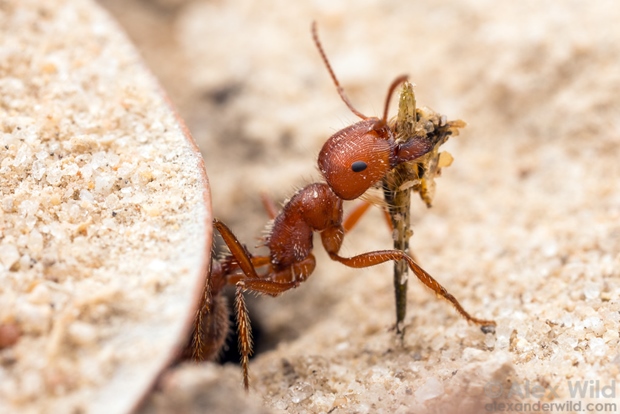
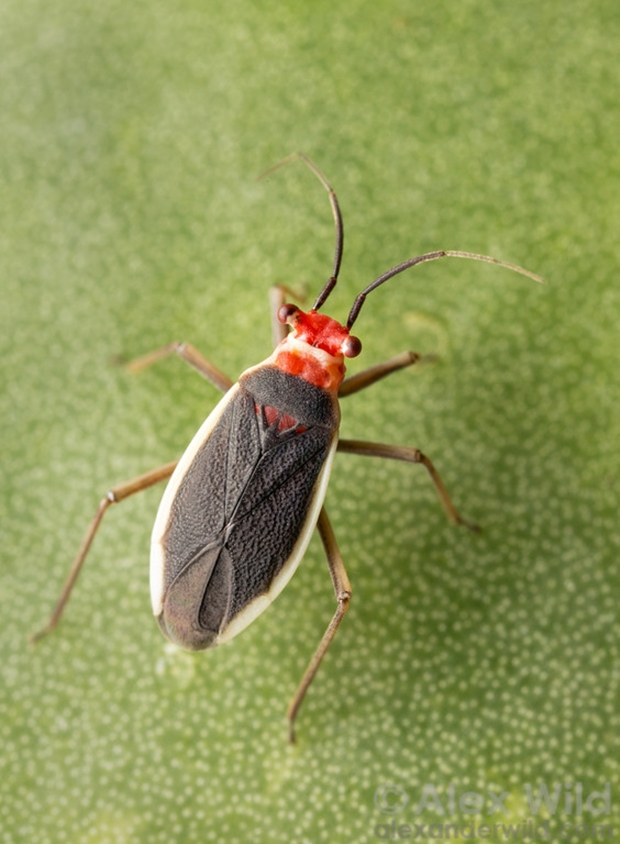
For a piece of visual entomology, look no further than Alex Wild Photography! Mirabelle has been following Alex's Twitter account for years now and this is one of my favourites: a Twitter perk that stands out from the Twitter mush!

There you get close with the bugs and once you magnify and get to their level, discover the beasts of engineering that they are: fascinating, awesome and pretty darn scary too!

Calliphora augur, Diamond Creek, Victoria, Australia

Myrmecia pyriformis, Yandoit, Victoria, Australia

Nesomyrmex wilda, Harlingen, Texas, USA

Nasute termite soldier, Yandoit, Victoria, Australia

Pogonomyrmex comanche, Red Rock, Texas, USA

Apis mellifera, Austin, Texas


The macro-photographic skillset of Texas-based American biologist Alex Wild plays its magic and his carefully-chosen
subjects are equally magical. The descriptives bear none of the generalist attributes that non-scientists like myself are guilty of using all too often when faced with unidentified small creatures: critters, bugs, insects, creepy-crawlies, flying things (ha-ha!) and other often-erroneous and somewhat disrespectful captions.

Here we dive deep into entomology territory, the taxa, order, genus, species and sub-species, and catch ourselves on a learning curve if we are serious enough about the views we entertain. This is how I found out, as a starting point, that myrmecology is the entomology branch related to ants.

When faced with the ingeniosity of life at its tiniest level, you cannot help but think about the Great Architect of the Universe and how none of this would have been possible without Him at the helm. Without politicising this post, I would venture the belief that atheists are deniers of God when you witness how the divine has engineered nature in a way that is humanely impossible to achieve.

Anastatus sp., Austin, Texas, USA

Ceratopogonidae forcipomyia, Cayó District, Belize

Hesperolabops gelastops, Austin Texas, USA

Tutelina elegans (male), Urbana, Illinois, USA

Chrysina lecontei, Huachuca Mountains, Arizona, USA
Tetragonisca angustula, Morretes, Paraná, Brazil

Alex Wild has managed to build a captive audience out of science proselytes like myself, and the macro-photographic journey amongst creatures of the tiny order is both captivating and humbling!

Source: All photography by Alex Wild Photography.

6 Aug 2017

Corsican Brands That Sparkle - Orezza

There are so many different ways to approach Corsica and describe its fiercely proud spirit, and advertising is one of them. Here are a couple of long-established Corsican brands that set the tone in terms of strong brand identity and notable advertising features.

Both the brands I selected just so happen to be drink-related (one is mineral water, the other a range of alcoholic beverages). It could be that when faced with the unforgiving Summer heat that blesses and curses the Mediterranean island in equal measures, one may get an appreciation as to why thirst quenching is on the mind... followed by a well-deserved apéritif.

But first let's quench our thirst!


Eau d'Orezza:

Bibliothèque Nationale de France

With its 161-year history, Orezza distinguishes itself as the Corsican mineral water par excellence. The longevity stake alone makes it well ahead of the competition, island-wide. And wait for it... In Roman times, the iron-rich sparkling water was already praised for its therapeutic virtues.

In the mid-19th century, the medical profession recognised that the iron-rich water was beneficial for treating anemia, liver and kidney ailments and paludism. A spa establishment was set up in-situ where visitors could take the waters.

Despite competition by cheaper local brands, Orezza remains a staple on Corsican restaurant tables. It is also associated with a number of high-profile Riviera-based sports events. All in all, it remains a success story despite a three-year hiatus in the mid-1990s when the company fizzled out. It was saved from drowning and is now positioned strongly on the market. You could almost say that Orezza is the Corsican San Pellegrino in its own right, and this includes its reversal of fortune.

Napoléon Tête Couronnée, oil on wood by Jacques-Louis David

Orezza water is still being sold in glass bottles to satisfy the purist and the well-heeled but is also available in plastic bottles of different handy formats. Sign of the times, you can buy the water naturelle or with a refreshing hint of mint, grapefruit or citron.

I am unable to date the eagle advert for sure yet from the lettering and art direction I estimate it to be c.1890. The heraldic spread eagle symbolises strength, perspicacity, fearlessness, heritage and immortality. In the Orezza context, one may be tempted to hastily associate it with Emperor Napoléon Bonaparte, Corsica's most illustrious offspring, but such a connection would actually be far-fetched. Besides the eagle representation here is that of a dishevelled bird, whereas Napoléon's was stockier and more polished in looks, not to mention the fact that the crown resting atop the eagle as part of the crest is not the imperial laurel wreath (see above).

Orezza advertising, 2000s

Bear in mind that the classic eagle symbology was resurrected from the Roman empire days by Napoléon. The eagle is popular symbology in heraldry; it is depicted on a variety of royal houses coats of arms and nation flags across the world and as a famous British bank emblem.

These days, Orezza's poster and magazine advertising is of a less solemn and ominous nature than the spread eagle composition. Oh, I love the cheerful vibe that captures what Orezza is really about! Bright, blue, Summery, upbeat and sparkling, featuring a lady who bears an uncanny resemblance to Corsica's modern day muse, Laetitia Casta... I must admit that I only managed to source a poor quality advertising image online, which does no justice to the actual rendering on a glossy upmarket magazine where it belongs, even after a few tweaks. Note to self: fish out my mum's old copies of Kalliste to seek out the full-page advert, scan it and upload it to this post.

Laetitia Casta and friend, photography by Walter Pfeiffer for Vogue Paris, October 2012

Orezza is proving to us that you can be over 160 years old and still be relevant, albeit amongst a bunch of millennials who were likely not brought up on the brand, and be the ubiquitous soft drink on the rallye and party circuit. Cheers to that!

Before you squeeze that slice of lemonn into your glass, make sure to catch Part 2 of our article!
Related Posts Plugin for WordPress, Blogger...